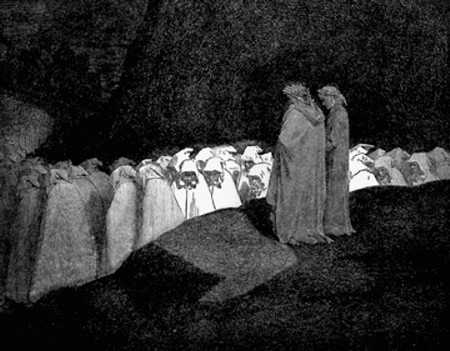
At the bottom of the slope, Dante and Virgil look up to see the demons, wings spread out wide, enraged at being fooled. But the devils are powerless to capture Dante and Virgil since they cannot go beyond the area of the grafters. Dante and Virgil then approach a line of souls dressed in capes and hoods appearing to be monks, slowly walking.
These souls are the hypocrites who misused the offices of the church, and lied to their flock and to God. Their punishment is to walk eternally in capes lined with lead, each step agonizingly slow and painful. Virgil then looks down and sees the sight of a soul crucified to the ground. This soul is Caiphas, the high priest who recommended that Jesus die rather than the Hebrew nation perish
The devils also lied about the bridge, which was broken. However the condemned Friars tell Dante and Virgil of a detour which takes them deeper into Hell.
THE THIEVES
